MPI Goes Global: 2027 World Literacy Summit
I have some news that I've been sitting with for a few days, trying to find the right words to share here. If you know me, struggling with words is a rarity. But this is a lot. It’s a whole lot!
This spring, I will be presenting my research at the World Literacy Summit at Oxford University.
Yes, Oxford University, in the United Kingdom. My first international conference appearance is really pulling out all the stops.
The World Literacy Summit is the largest gathering of global literacy professionals in the world. Representatives from more than 85 countries come together at Oxford University each year with a single goal: accelerating the end of global illiteracy. This year's theme is Literacy in a Connected World, and the program includes researchers, policymakers, educators, and NGO leaders from across the globe. It is, by any measure, one of the most significant literacy conferences in existence.
And I get to be there, advocating for instruction that meets neurodivergent students where they are and reminding delegates in attendance that different doesn’t mean deficient.

World Literacy Summit 2027
What I'll Be Sharing
My presentation will focus on the musical-phonetic method, which is the original multimodal literacy approach I developed and piloted through my doctoral research. This method was designed to do something specific: take what structured literacy already does well and give it an additional layer of neural engagement for the learners who need more than even the most rigorous phonics instruction can provide.
In short, it's about reaching the students who are still being left behind, and doing it by working with how their brains actually process information rather than against it.
I'll be sharing the neuroscientific rationale behind the method, the results from my original pilot study, and what those results suggest about the potential for this approach to make a meaningful difference for neurodivergent learners.
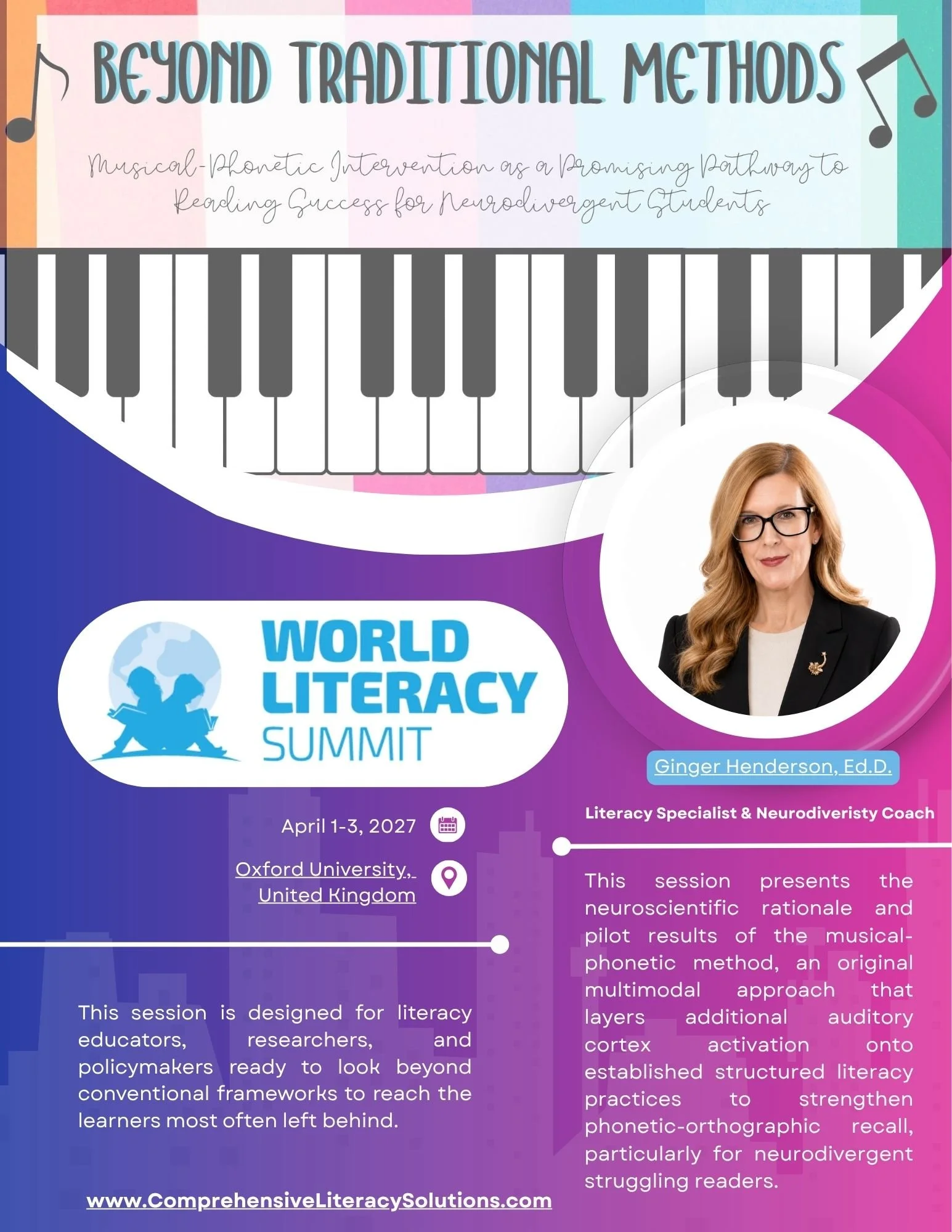
Beyond Traditional Methods, World Literacy Summit Session, 2027
What This Means to Me
I started this work because I saw students who were trying hard, receiving good instruction, and still struggling. I started it because I am one of those students, a neurodivergent learner who knows firsthand what it feels like when the standard approach doesn't quite fit your brain.
Taking that work to Oxford is something I could not have imagined when I started writing my dissertation. And while I know there is still so much work to do — more research, more replication, more students to reach — this feels like a meaningful moment in that larger journey.
I'll be sharing updates here as the conference approaches. If you have questions about the research or the method, I'd love to hear from you.
And if you’d like to learn more or register for the conference, you can visit my Events Page for more information.
Chocks away, neurodivergent advocates! We’ve got work to do!
~Dr. Henderson